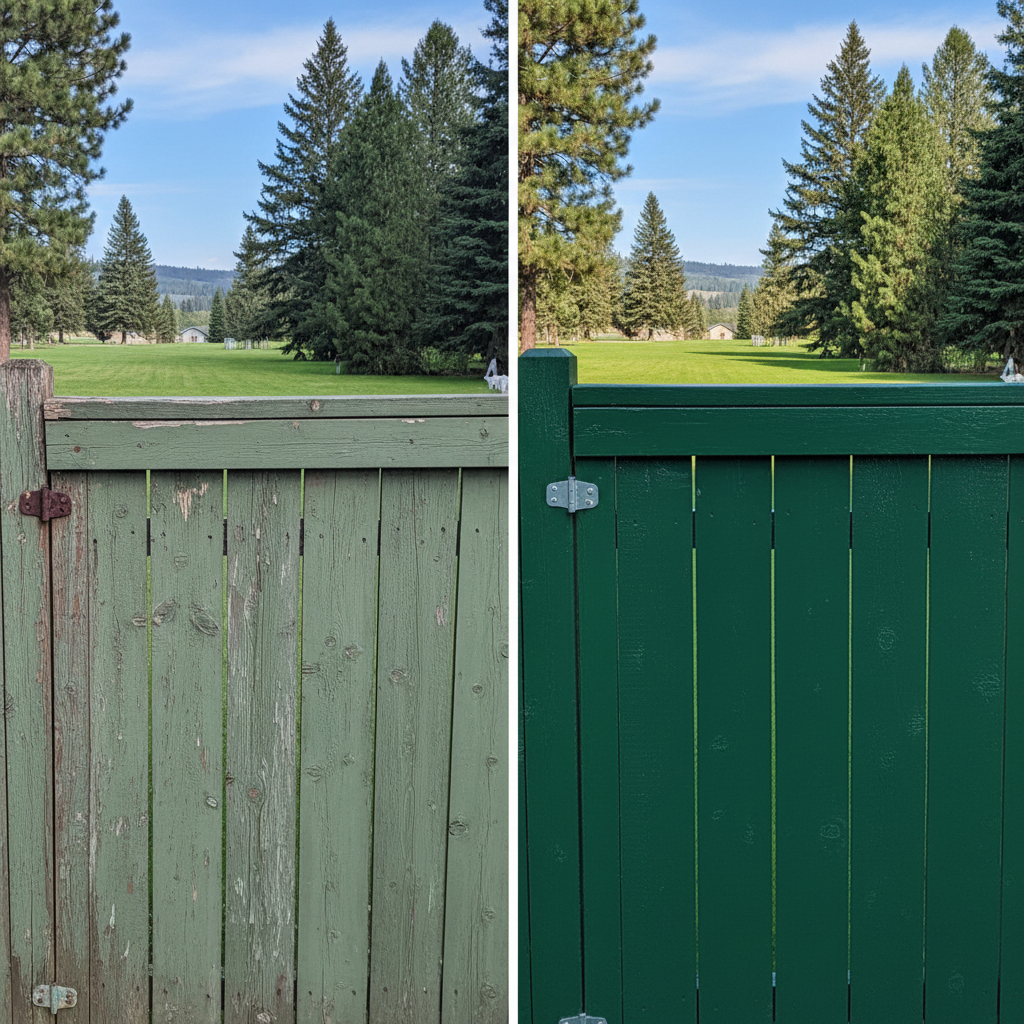
You've got a fence that needs painting, and you're probably wondering the best way to tackle it. It's a common question I get from folks all over Coeur d'Alene, whether they're in the older neighborhoods downtown or out by Hayden Lake. Should you grab a sprayer, or stick with the classic brush and roller? There's no single right answer for everyone, but I can tell you what I've seen work best over the years.
The Spraying Approach: Fast, But Is It Best?
Spraying a fence sounds like the quickest way to get the job done, right? And in many ways, it is. You can cover a lot of ground really fast with a good sprayer. It's especially appealing if you've got a long fence line, maybe one that runs along a big property or separates you from a busy street. The paint goes on evenly, and you can often get into all those nooks and crannies that a brush might miss, especially on intricate picket fences or rough-sawn cedar.
However, there are some big downsides. First off, overspray is a real concern. You've got to be super careful about where that paint mist is going. I've seen plenty of driveways, cars, and even neighbors' houses accidentally get a new coat of paint because someone wasn't paying attention or didn't properly mask everything off. Wind is a huge factor here in North Idaho; a calm morning can turn breezy in an hour, and suddenly your paint is drifting. You'll spend a lot of time masking off plants, shrubs, concrete, and anything else you don't want painted. That prep work can eat up a lot of the time you save by spraying.
Another thing to consider is paint thickness. While spraying gives a nice, even coat, it can sometimes go on thinner than a brushed application. This means you might need two or even three coats to get the same durability and color saturation you'd get with fewer brushed coats. And while it might look good initially, that thinner coat can mean less protection against our harsh Coeur d'Alene winters and hot summers. We get some serious temperature swings here, and a good thick coat of paint is your fence's best defense.
Brush & Roll: The Tried-and-True Method
Now, let's talk about brushing and rolling. Yeah, it's slower. There's no getting around that. You're putting in more elbow grease, and it takes more time to cover the same amount of fence. But there are some significant advantages that often make it the better choice, especially for homeowners.
When you brush or roll, you're really working that paint into the wood. You're pushing it into the grain, into any small cracks, and creating a much thicker, more protective film. This means better adhesion and, ultimately, better durability. Your paint job is going to last longer, resisting peeling and fading for years to come. That's a big deal when you're talking about the investment of time and money in painting your fence.
Overspray isn't an issue with brushing and rolling. You have much more control over where the paint goes. You still need to be careful, of course, but you won't be accidentally painting your prize-winning petunias or your neighbor's new truck. This means less time spent on masking and more time actually painting. Cleanup is generally easier too, as you're not dealing with paint mist everywhere.
The finish often looks richer and more substantial with a brush and roll. You get a really deep, even color that just feels more robust. For fences around your main living areas, where appearance really matters, this method usually delivers a superior aesthetic.
What I Recommend for Coeur d'Alene Fences
For most homeowners in Coeur d'Alene, especially those with typical residential fences, I almost always recommend the brush and roll method. Yes, it takes more time and effort upfront, but the benefits in durability, protection, and appearance are well worth it. You'll get a paint job that stands up better to our weather, looks fantastic, and lasts longer, saving you from having to repaint sooner.
If you've got a massive, miles-long ranch fence out in the valley, and you're just looking for quick coverage, then spraying might make sense, assuming you can control the overspray. But for your backyard fence, the one you see every day, the one that defines your property, brushing and rolling is the way to go.
At Coeur d'Alene House Painters, we've done it both ways, and we've seen the results firsthand. For quality and longevity, brush and roll wins out nearly every time. It's a solid investment in your home's curb appeal and protection.